

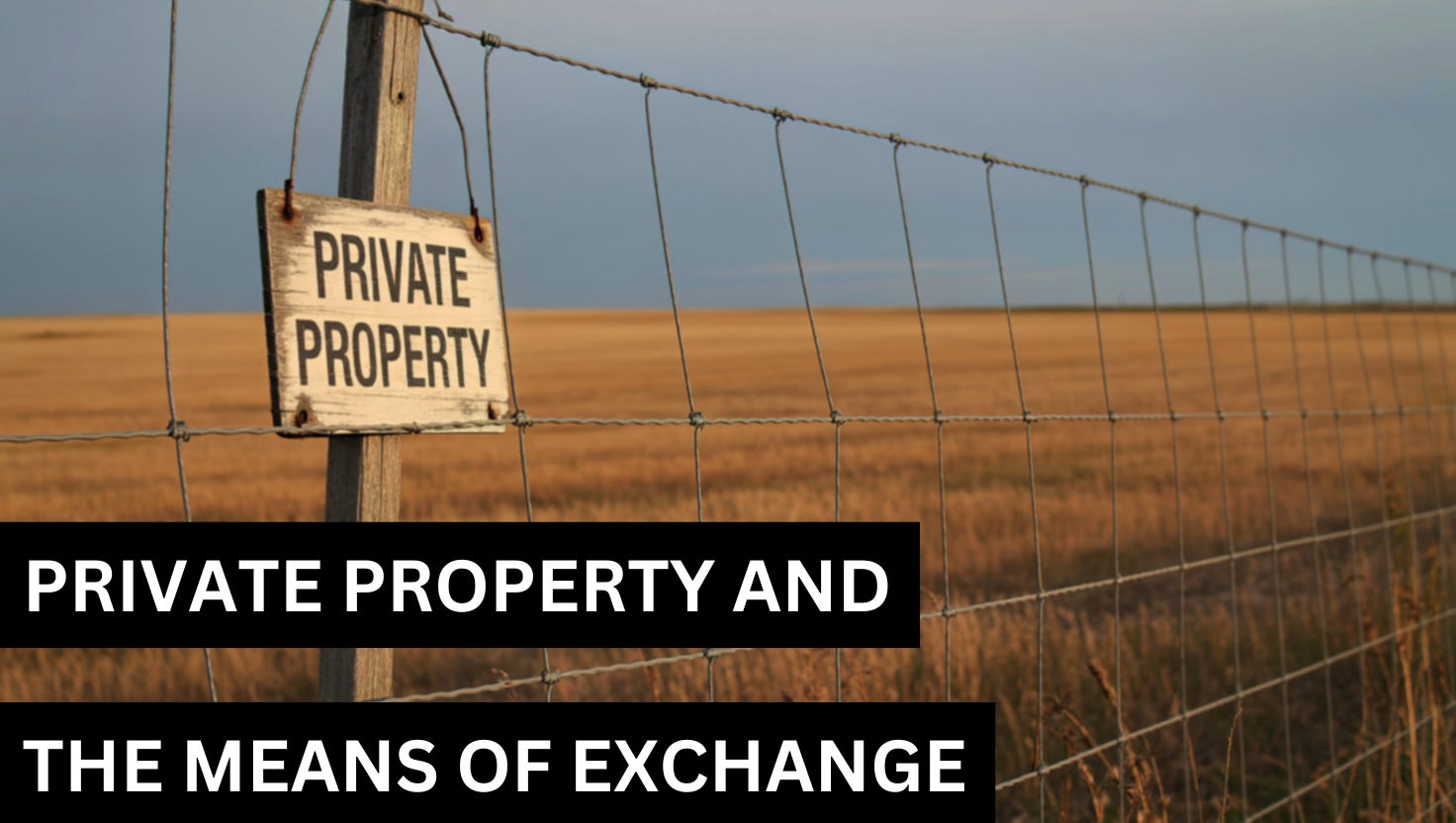
Private property is an oxymoron for all property, by nature, is exclusive.
Even in communist systems, resources and space are exclusive in practice. Only certain people can access factories, apartments, or goods at any given time.
Which means when Marxists attempted to abolish private property they were really doing something else.
Marx himself said as much in the Communist Manifesto: “the distinguishing feature of Communism is not the abolition of property generally, but the abolition of bourgeois property.” But bourgeois property is simply property used to generate wealth through exchange. So what Marxists were really targeting — and what they actually destroyed — was the means of exchange.
The means of exchange refers to the places and ways people trade their labor, ideas, goods, services, and money for the labor, ideas, goods, services, and money of others.
Communism restricted the means of exchange then by
fixing prices
controlling the state education curriculum
making education compulsory
nationalizing factories
restricting movement
rationing goods
criminalizing private business ownership
criminalizing unauthorized printing
criminalizing speculation
currency controls
All of which not only limited what people could earn, but placed restrictions on the kind of person one could become. In other words when the government controls exchange, it controls identity -- or the lack of it.
And communists, then, called this erasure of identity utopia. But a world without distinct interests and identities is not paradise -- it’s a colony. After all, ants don’t have ambitions. They have assignments.
Zigmund Reichenbach has an M.A. in Philosophy from West Chester University and is a professional advocate for less government. You can help him combat bad ideas in politics and philosophy by donating to his work at https://ko-fi.com/zigmundreichenbach .
Follow him on X at @zreichenbach1!